


Why Choose Us?
Experienced Team
Our company was established in 2013 and is located in Hangzhou, Zhejiang. Since then, we have anchored the development of the industry and are committed to becoming industry leaders, further expanding their business areas.
R&D Capability
We will continue to move forward with a spirit of innovation, constantly breaking through the field of edge banding products. We have invested heavily in research and development to launch new products for laser edge banding and digital printing, and have been awarded the honorary titles of "National Science and Technology oriented Small and Medium sized Enterprise" and "Shandong Province Specialized, Refined, Special, and New Small and Medium sized Enterprise".
Quality Assurance
We provide a full guarantee for goods and services provided by the company. In our showrooms, you can touch any of your ideas with professional advice and visualization tools.
Reasonable Price
You save your time and money due to our advanced production technologies, continuous development and optimization of all our business processes.
Definition of ABS Edge Banding
ABS is a high grade thermoplastic that's very resistant to everyday knocks and scrapes, so it's great for furniture in high-traffic areas. As an edging, ABS is very flexible, giving almost unlimited application options. Whether straight edge boards, curves, or custom shapes, you can mould this material to fit your design aesthetic. ABS edge banding is a plastic edge banding produced from ABS resins, instead of PVC resins, which are more common. ABS edge banding can withstand water, is highly heat resistant, and isn't damaged by domestic cleaning products making it perfect for family kitchens.

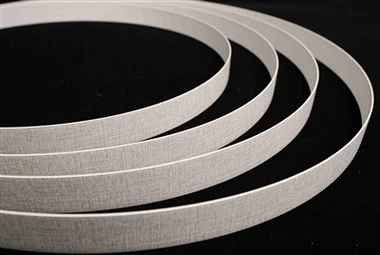
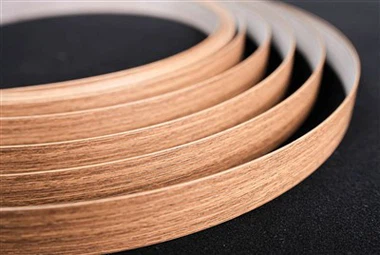


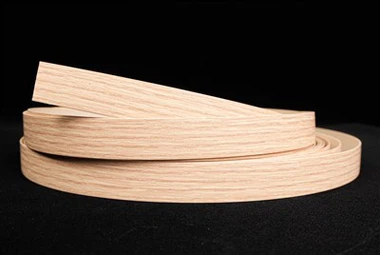


Benefits of ABS Edge Banding
Today, there are two types of edge strips commonly used in edge banding operations: one is ABS edge banding; the other is PVC edge banding. The edge sealing effect of the ABS edge banding is better than that of the PVC edge banding. Although the sealing cost of the former is relatively high, it is still more and more favored by the market.
Fillings
Fillers are used in many different materials to reduce costs. There is no filler added in the ABS edge banding, which increases the production cost to some extent. However, the advantage of this comparison with PVC edge banding is that the rounded corners are smoother after trimming, and the surface of the ABS edge strip is more resistant to impact. Generally, if it is not a particularly strong impact, it will not cause an abnormal deformation of the edge band.
Environmental protection
The environmental protection problems of wood-and-wood structural products are more and more valued by the public, and wood products with large odors are difficult to accept. The material used in the ABS edge banding is odorless and non-irritating. Even if it is burnt, its odor will not cause pollution hazard. This precisely meets the environmental protection concept recognized by the public.
Temperature resistance
ABS edge banding and PVC edge banding also have some differences in temperature resistance. ABS edge strips can withstand temperatures up to 99 degrees before they change state. Regardless of the edge banding of the material, it can cause various board deformations after it being deformed by heat.
Stability
In terms of chemical composition stability, ABS edge banding also has a greater advantage than PVC edge banding, which has a lot to do with the formulation of the material. ABS edge banding has good corrosion resistance and wear resistance. Even if it is soaked with soy sauce, diesel oil or peanut oil, it will not affect its material.
Is ABS Edge Banding or PVC Edge Banding Better For Edge Banding?
ABS edging has been on the market for about 20 years, slowly taking the place of PVC in the furniture and woodworking industries. The rise in popularity was driven by companies and manufacturers becoming more aware of their environmental impact, and the need to find more ecologically friendly alternatives to products and processes.
ABS is a high grade thermoplastic that's very resistant to everyday knocks and scrapes, so it's great for furniture in high-traffic areas. It can withstand water, is highly heat resistant, and isn't damaged by domestic cleaning products making it perfect for family kitchens.
It's also a great material for use in offices, bathrooms, all interior furnishings, shop fitting and coffin manufacturing, even for exhibition stands . Its high level of heat resistance means it can be used on kitchen cabinets next to hot ovens or hobs without damage or distortion.
As an edging, ABS is very flexible, giving almost unlimited application options. Whether straight edge boards, curves, or custom shapes, you can mould this material to fit your design aesthetic. It's also relatively easy to process on edge banding machines.
ABS is lighter in composition and density than PVC but still provides an incredibly durable surface to protect your board edges. It offers some of the same positives as PVC, with the added bonus of being fully recyclable and biodegradable.

It's almost always easier and more practical to build a project with plywood. The drawback to using this type of "sheet good" is that the edges of the plywood must be covered so that panel will look as close as possible to a piece of hardwood lumber. The two most common solutions are hardwood edging and ABS edge banding.
Hardwood edging can be a simple as gluing a wood strip to the edge of the plywood and flushing cutting the top edge to the plywood surface. This method allows the builder to use a wide array of router bits to create a pleasing edge design.
If the project calls for a basic straight edge on the plywood, ABS edge banding may be just what the doctor ordered. ABS edge banding is real wood veneer that is pre-sanded and available in a 7/8" width. This is ideal for 3/4" thick sheet goods such as plywood and MDF because it allows a bit of overhang and makes it easy to trim it to a flush edge.
The thickness of ABS edge banding can vary depending on the manufacturer and the specific application.
In general, the thickness of ABS edge banding ranges from 0.3mm to 3mm.
A thickness of 0.3mm to 0.5mm is considered thin, and is typically used for small edges and low-use surfaces.
A thickness of 0.6mm to 1mm is considered medium, and is suitable for most regular use surfaces, and it's the most common thickness found in the market.
A thickness of 1mm to 3mm is considered thick and it's used for high-use surfaces, such as countertops, table tops and other heavy-use surfaces.
When choosing the thickness of your ABS edge banding, it's important to consider the intended use of the surface, as well as your budget. Thicker ABS edge banding is more durable, but it can also be more expensive.

Choosing the right ABS edge banding for your laminate sheets is crucial to achieving a seamless and polished look for your furniture or surfaces. ABS edge banding serves both a functional and aesthetic purpose, providing durability to the laminate's edges while enhancing its appearance. Here's a guide on how to find the exact edge banding for your choice of laminate.
Identify Laminate Specifications
Start by gathering information about your laminate sheet. Note down its colour, pattern, thickness, and texture. Laminate manufacturers often provide specifications, and these details will be essential in selecting the appropriate ABS edge banding.
Material Compatibility
Consider the material of your laminate. Common laminate materials include high-pressure laminate (HPL) and low-pressure laminate (LPL). Ensure that the ABS edge banding you choose is compatible with your specific type of laminate.
Colour Matching
Achieving a seamless look involves precise colour matching. Many ABS edge banding suppliers offer a variety of colours and finishes. Request samples or swatches to compare with your laminate and choose the option that closely matches or complements it.
Texture and Finish
Pay attention to the laminate's texture and finish and the ABS edge banding. Some laminates have a glossy finish, while others may be matte or textured. Select edge banding that replicates these characteristics for a cohesive appearance.
Thickness Consideration
Measure the thickness of your laminate. ABS edge banding comes in various thicknesses, so it's crucial to select one that aligns with the thickness of your laminate. A snug fit will ensure durability and prevent the ABS edge banding from peeling over time.
Application Method
Different edge banding products may require specific application methods. Some may be iron-on, while others are applied using adhesives. Understand the application process and ensure it aligns with your skill level and available tools.
Durability and Quality
Invest in high-quality edge banding to ensure durability. Check product reviews, consult with suppliers, and opt for edge banding resistant to wear, moisture, and other environmental factors.
Specialised Options
Sometimes, you might need specialised edge banding solutions, such as pre-glued, PVC, or ABS edge banding. Evaluate these options based on your specific project requirements and the level of durability needed.
Consult with Experts
If you're uncertain about the best ABS edge banding for your laminate, don't hesitate to consult with experts or professionals. Suppliers, carpenters, or interior designers can provide valuable insights and recommendations based on their experience.
Budget Consideration
Consider your budget when selecting ABS edge banding. While it's essential to prioritise quality, various options are available at different price points. Find a balance between affordability and the desired level of quality.
How to Judge the Quality of ABS Edge Banding?
Look at the hue and surface roughness of the ABS edge banding. The color of the surface of a good edge banding is also very important. Whether the color is close to the customized product and gorgeous. If the surface is very rough and there are scratches, the quality will not be much better. This is the surface quality of the edge banding. It has nothing to do with the quality of the inner material of the ABS edge banding, mainly the production process of the ABS edge banding factory and the production technical skills of the employees. A good edge band is: the surface must be smooth, no or very little blistering, no or very little graining, moderate gloss, not too bright or too matte.
Look at the flatness of the surface and bottom surface of the ABS edge banding, whether the thickness is uniform, otherwise it will cause the joint of the ABS edge banding and the plate, the glue line is too conspicuous or the gap between the plate and the ABS edge banding is too large to affect the overall beauty. Details determine success or failure, and often a small detail problem may bring about an embarrassing situation where the overall effect is not good.
Whether the edge trimming is whitish, whether the surface of the bending ABS edge banding is seriously whitish, and whether the edge trimming background color of the edge banding is close to the surface color of the board. ABS edge banding is mainly made of PVC and calcium carbonate plus additives. If the content of calcium carbonate is too high, the phenomenon of ABS edge banding and bending will appear, which proves that the quality of this kind of product is not good.
Whether the strength is OK and whether there is elasticity. High strength means good wear resistance, and the corresponding quality is also better. If the strength is too high, it also means that the processing difficulty is increased. Low elasticity means low wear resistance and low anti-aging ability. In addition, according to the needs of actual production, it is generally necessary to manually trim the edges, and soft points can be appropriately made, and automatic ABS edge banding machines can be appropriately made hard points.
Whether the adhesive is evenly applied, and whether it is easy to fall off during use.
Smell whether the ABS edge banding has any smell. Products produced with good quality raw materials generally have little taste. If the taste is too large, it means that the quality of the raw materials used in production is relatively poor.
How to Glue a ABS Edge Banding?
Choosing the right adhesive
Choosing the right adhesive for ABS edge banding is critical to ensuring a high-quality bond. Using the wrong adhesive could lead to a failed edgeband. There are many reasons why ABS edge banding may not adhere correctly. Here are some tips for avoiding common problems. You should also wear protective clothing and gloves during the application process. The correct adhesive can help you avoid problems such as bubbles and gaps.
Choosing a hot-melt glue
Choosing a hot-melt glue is critical for successful ABS edge banding projects. You need to match the correct temperature, pressing time and pressure for the ABS edge banding to adhere to the substrate. If any of these factors is off, the edges may delaminate or fall off. To ensure that the bonding process goes smoothly, you should keep the temperature of the glue tank and the ABS edge banding material above room temperature.
Using edging tape
ABS is a plastic polymer that is available in both flexible and rigid forms. ABS edge banding is commonly used on furniture to provide a durable finish. The popular design is wood grain such as maple edge banding. It covers exposed edges and provides the appearance of reliable materials. This article will discuss the process of applying edging tape to ABS edge banding. It is important to remember that the right edge banding material will depend on the size and thickness of the material. When applying the edge banding, it is important to use the correct adhesive. The wrong glue can be disastrous.
Cleaning up after application
The best way to clean up after applying ABS edge banding is by washing the materials. Using acetone will remove any excess contact cement, but you should be careful not to damage the semi-gloss finish. You can also use a chisel to flush the laminated board. It is important to note that removing the edge banding from the laminated board requires a sharp utility knife and nick-less chisel. If you accidentally misapply the ABS edge banding, you can reapply it by ironing it over it to soften the glue. You can also use a wood block to press down the hot veneer tightly. After this, check for any raised areas. If so, you can repeat heating and pressing it down with the wood block. Otherwise, you can cut off the raised area. After applying the edge banding, make sure that the edges are smooth and level.
Our Factory
Our company was established in 2013 and is located in Hangzhou, Zhejiang. Since then, we have anchored the development of the industry and are committed to becoming industry leaders. In 2016, we entered the industry center and established Linyi Chaotai Industrial Co., Ltd. in Shandong Province. In August of the same year, we achieved systematic operation of production, operation, and sales, laying a solid foundation for the rapid development of the enterprise. 2022 is an important milestone for us, as we have broken through the intelligent manufacturing process and reached the international advanced level. This achievement has earned us the honorary titles of "National High tech Enterprise" and "Shandong Province Innovative Small and Medium sized Enterprise".


In 2023, we will continue to move forward with a spirit of innovation, constantly breaking through the field of edge banding products. We have invested heavily in research and development to launch new products for laser edge banding and digital printing, and have been awarded the honorary titles of "National Science and Technology oriented Small and Medium sized Enterprise" and "Shandong Province Specialized, Refined, Special, and New Small and Medium sized Enterprise". At the same time, we have also established Deqing Chaotai Decoration Materials Co., Ltd., further expanding our industrial layout.


Our Certificate

Ultimate FAQ Guide to ABS Edge Banding
We're well-known as one of the leading ABS edge banding manufacturers and suppliers in China. Please feel free to buy customized ABS edge banding made in China here from our factory. For more information, contact us now.
Solid Color PP Edge Banding, MABS New Concept Edge Banding, Soft Touch ABS Edge Banding