


Why Choose Us?
Experienced Team
Our company was established in 2013 and is located in Hangzhou, Zhejiang. Since then, we have anchored the development of the industry and are committed to becoming industry leaders, further expanding their business areas.
R&D Capability
We will continue to move forward with a spirit of innovation, constantly breaking through the field of edge banding products. We have invested heavily in research and development to launch new products for laser edge banding and digital printing, and have been awarded the honorary titles of "National Science and Technology oriented Small and Medium sized Enterprise" and "Shandong Province Specialized, Refined, Special, and New Small and Medium sized Enterprise".
Quality Assurance
We provide a full guarantee for goods and services provided by the company. In our showrooms, you can touch any of your ideas with professional advice and visualization tools.
Reasonable Price
You save your time and money due to our advanced production technologies, continuous development and optimization of all our business processes.
Definition of Edge Banding
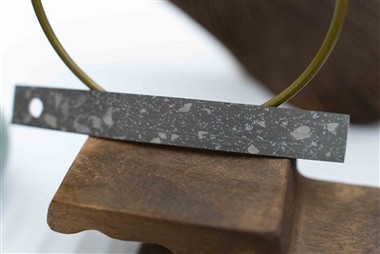
Edge banding or edgebanding is the name of both a process and an associated narrow strip of material used to create durable and aesthetically pleasing trim edges during finish carpentry. Edge banding is used to cover the exposed sides of materials such as plywood, particle board, or MDF, increasing durability and giving the appearance of a solid or more valuable material. In Layman's terms, edge banding is a thin material used to seal the exposed and raw edges of plywood. Heat sensitive adhesive on one side is applied to the board while the other side acts as a barrier against dirt and moisture. Edgebanding is mainly done to cover plywood sides in order to match a cabinet's finished look, but it also protects the inner plywood from possibly warping.




Benefits of Edge Banding
Edge banding, a technique that involves applying a thin layer of real wood edge banding to the edges of a substrate, offers a multitude of benefits that contribute to the overall quality and appeal of the finished piece.
Aesthetic enhancement: Edge banding provides a seamless and natural transition between the exposed surfaces of furniture or panels and their edges. This creates a visually appealing look that closely mimics solid wood, enhancing the overall aesthetics of the piece. The wide range of wood species and grain patterns available in veneer allows designers and manufacturers to match the edge banding with the surface veneer or achieve contrasting and artistic effects.
Versatility in design: The flexibility of edge banding allows for intricate and creative designs that might be challenging to achieve with solid wood. Curved edges, bevels, and complex profiles can be easily accomplished using veneer, enabling designers to explore new horizons and push the boundaries of their creativity. There are various sizes of edge banding like 1mm edge banding, 3mm edge banding, ⅛ inch edge banding, ⅕ inch edge banding.
Cost-effectiveness: Using solid wood for edging can be expensive due to the higher material costs and additional labor required. Edge banding offers a cost-effective alternative while still providing the appearance of solid wood. This makes it an ideal choice for achieving a high-end look without exceeding the budget.
Durability and stability: Edge banding not only adds an elegant touch but also improves the durability and stability of furniture and panels. It helps protect the edges from chips, cracks, and moisture penetration, which can lead to swelling and warping. The veneer layer acts as a protective barrier, increasing the lifespan of the piece and maintaining its structural integrity.
Eco-friendly choice: Wood edge banding is a sustainable choice compared to using solid wood for edging. By utilizing a thin layer of veneer, manufacturers can make the most of a single log of wood, reducing waste and conserving natural resources. This aligns with the growing demand for environmentally friendly practices in various industries.
Easy maintenance: Maintaining furniture with edge banding is hassle-free. The smooth, sealed edges are less prone to accumulating dust and dirt, making cleaning a breeze. Additionally, the protective layer of wood veneer edge banding contributes to the overall ease of maintenance and extends the product's lifespan.
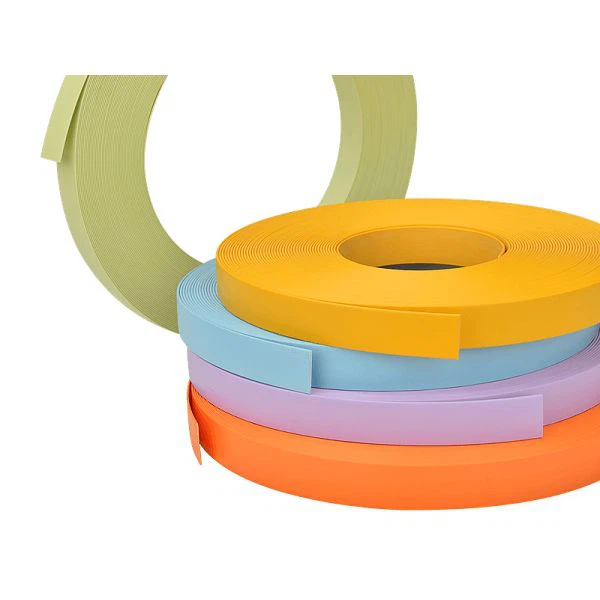
While we have mentioned wood a few times, edge banding is only used for some wood material. For example, a solid wood item would not require edge banding as it is durable enough. As solid wood becomes more expensive and the need for harvesting increases, potentially devastating to the environment, the market for manufactured wood has vastly expanded, along with the need for edge banding.
Manufactured wood, e.g., plywood, particle board, and MDF, do not have solid wood' s density or beautiful smooth finish. It requires the application of edge banding to create a "natural" edge. A component made from manufactured wood panels typically has a decorative and protective top and bottom surface. Still, it will usually require edge banding along the edges to create the decorative and protective seal.
It is known to us that wooden boards have a raw edge when cut. This raw edge, if left uncovered, can pose serious threats to the furniture as wood has a natural tendency to absorb water. This tendency cannot be removed completely however it can only be reduced. Above all, these raw edges can also injure the consumer if he / she is not alert. With a slight careless movement these raw edges can cause a serious injury. That is the reason edge banding is essential for furniture like workstations, office tables, executive tables, reception tables and all those furniture that has sharp edges.
Edge banding protects the wooden panels in your furniture from moisture, thus reducing the effects of atmospheric humidity and liquid spills. This means, the strength and durability of the wood increases. So, next time you spill coffee on your table, and it drips down the edge, thank the edge banding for protecting the wood.
In few of the home & living furniture one can also find edge banding like the doors of cabinets, wardrobes and side units. This home & living furniture require more than office furniture because there will be kids at home and they will require a danger free zone always.
Common Edge Banding Materials
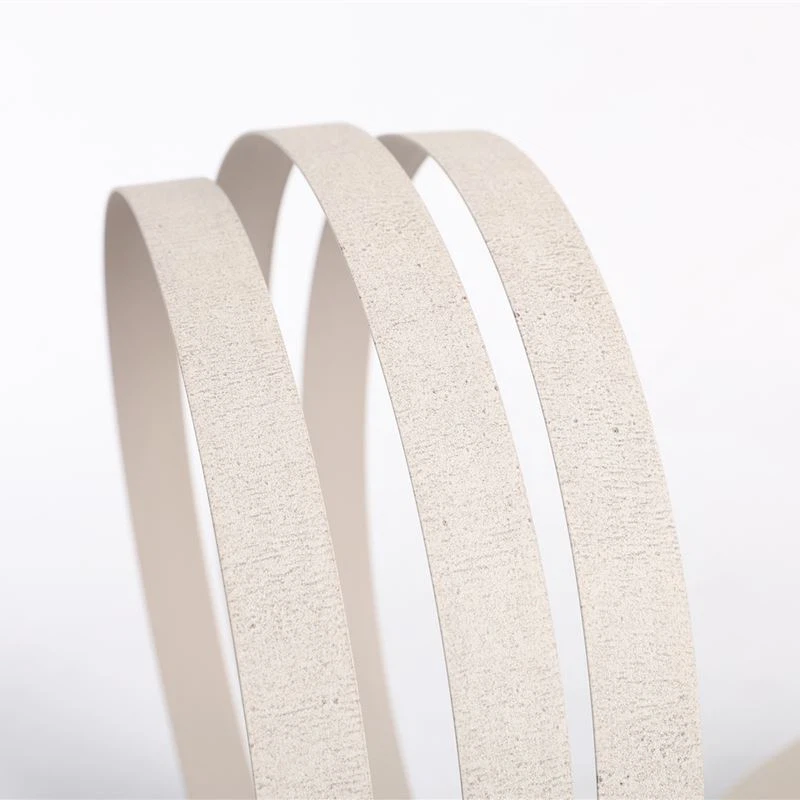
The material composition of edge banding plays a significant role in its appearance, durability, and suitability for different applications. Common materials include wood veneer, PVC, ABS, and polyester. Each material offers distinct characteristics:
Wood Veneer
Provides a natural and authentic look, perfect for projects where aesthetics are paramount. It can be stained or finished to match the wood grain of the main surface.
PVC (Polyvinyl Chloride)
Known for its durability and moisture resistance, PVC edge banding is ideal for applications in kitchens, bathrooms, and areas prone to moisture exposure. It comes in a wide range of colors and finishes.
ABS (Acrylonitrile Butadiene Styrene)
Similar to PVC, ABS edge banding offers excellent durability and is resistant to impact and scratches. It is available in a variety of colors and textures.
Polyester
Polyester edge banding offers exceptional heat resistance, making it suitable for applications such as kitchen countertops and tabletops. It also provides good chemical resistance and comes in various colors and patterns.
The Considerations for Buying Edge Banding
Edge banding is a crucial component in woodworking projects, providing a seamless finish to the edges of furniture, cabinets, and other woodworking creations. It not only enhances the appearance but also adds durability and protection to the edges, prolonging the life of the piece. However, with various options available in the market, choosing the right edge banding for your project can be a daunting task. Here, we delve into the key factors to consider when making this important decision.
Material composition
The material composition of edge banding plays a significant role in its appearance, durability, and suitability for different applications. Common materials include wood veneer, pvc, abs, and polyester.
Thickness and width
The thickness and width of the edge banding are crucial considerations that impact both aesthetics and functionality. The thickness should match the thickness of the substrate to ensure a flush finish. Additionally, the width of the edge banding can influence the overall appearance of the piece. While narrower edge banding may provide a more subtle look, wider edge banding can make a bold statement.
Matching grain and color
Achieving a seamless transition between the edge banding and the main surface is essential for a professional finish. When selecting edge banding, consider factors such as grain pattern, color consistency, and texture to ensure a perfect match with the substrate. This is particularly important for projects where the natural beauty of wood is a focal point.
Application method
Edge banding can be applied using various methods, including hot melt, pre-glued, or pressure-sensitive adhesive. The chosen application method should align with the project requirements, taking into account factors such as ease of installation, durability, and adhesive performance.
Budget and project scale
Finally, consider your budget and the scale of your project when selecting edge banding. While high-quality materials may come at a premium price, they offer superior durability and aesthetics, making them a worthwhile investment for larger projects or high-end furniture pieces. However, for smaller projects or those with budget constraints, there are more economical options available without compromising on quality.
How to Judge the Quality of Edge Banding?
● Look at the hue and surface roughness of the edge banding. The color of the surface of a good edge banding is also very important. Whether the color is close to the customized product and gorgeous. If the surface is very rough and there are scratches, the quality will not be much better. This is the surface quality of the edge banding. It has nothing to do with the quality of the inner material of the edge banding, mainly the production process of the edge banding factory and the production technical skills of the employees. A good edge band is: the surface must be smooth, no or very little blistering, no or very little graining, moderate gloss, not too bright or too matte.
● Look at the flatness of the surface and bottom surface of the edge banding, whether the thickness is uniform, otherwise it will cause the joint of the edge banding and the plate, the glue line is too conspicuous or the gap between the plate and the edge banding is too large to affect the overall beauty. Details determine success or failure, and often a small detail problem may bring about an embarrassing situation where the overall effect is not good.
● Whether the edge trimming is whitish, whether the surface of the bending edge banding is seriously whitish, and whether the edge trimming background color of the edge banding is close to the surface color of the board. Edge banding is mainly made of PVC and calcium carbonate plus additives. If the content of calcium carbonate is too high, the phenomenon of edge banding and bending will appear, which proves that the quality of this kind of product is not good.
● Whether the strength is OK and whether there is elasticity. High strength means good wear resistance, and the corresponding quality is also better. If the strength is too high, it also means that the processing difficulty is increased. Low elasticity means low wear resistance and low anti-aging ability. In addition, according to the needs of actual production, it is generally necessary to manually trim the edges, and soft points can be appropriately made, and automatic edge banding machines can be appropriately made hard points.
● Whether the adhesive is evenly applied, and whether it is easy to fall off during use.
● Smell whether the edge banding has any smell. Products produced with good quality raw materials generally have little taste. If the taste is too large, it means that the quality of the raw materials used in production is relatively poor.
How to Install Edge Banding?
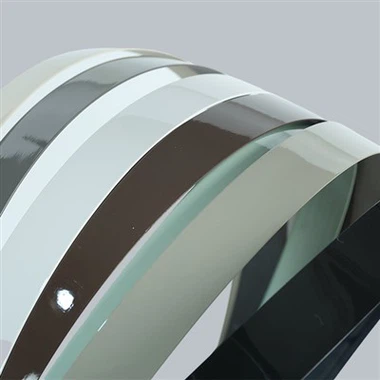


With a roll of wood veneer edge banding and a few simple tools, you can cover raw plywood edges so the plywood is nearly indistinguishable from solid wood. Iron-on edge banding is wood veneer with hot-melt adhesive preapplied to the back. You simply hold the edge banding in place, run over it with a household iron to heat the adhesive, let it cool and trim the edges flush. We'll show you how to do it and share some tips for getting perfect results every time.
Tip 1: Clean up the edges
Saw marks or other roughness will prevent a strong bond between the edge banding and the plywood. To avoid loose edge banding, sand the edges of the plywood smooth before you apply it. To keep from rounding edges while you sand, wrap a quarter sheet of 120-grit sandpaper around a small block of 3/4-in. plywood and screw another scrap to it as a guide. When the sandpaper starts showing signs of wear, remove the screw and reposition the sandpaper. After sanding, vacuum the edge to remove any dust.
Tip 2: Iron on the edge banding
Use your regular clothes iron if you wish, but be aware that you may get adhesive on the soleplate. To be safe, buy a cheap iron from a thrift store or discount retailer. Empty the water out to avoid any steam and move the heat setting to "cotton." Use scissors to cut a length of edge banding about 1 in. longer than the edge you're covering. Starting at one end, center the edge banding with equal overhangs on each side and set the preheated iron at that end. Move the iron along the surface, keeping the edge banding centered with your other hand. Move the iron along at a rate of about 2 in. per second. The goal is to melt the adhesive without scorching the wood.
Don't sweat it if you scorch or misalign the banding during application. Just run the iron over it again to soften the glue so you can peel the banding away. Cut yourself a new piece and start over.
Tip 3: Press it while it's hot
Make sure the edge banding is fully adhered by pressing it down with a block of wood while it's still hot. Go back and forth over the edge a few times while the glue is cooling. Look for any areas that are raised. Heat those spots again and press them again with the block.
Tip 4: Slice off the ends
The easiest way to remove the overhanging ends is to simply slice them off with a utility knife. Place the edge banding on a work surface and lightly score it a couple of times. Don't worry about cutting all the way through. Just lift the plywood and bend up the banding to snap it off.
Tip 5: Use a trimmer on edges
The quickest and easiest way to trim the edge banding flush to the plywood is with a special edge banding tool.
Tip 6: Modify your trimmer
Trimming the overhanging edges flush to the plywood without damaging the edge banding can be tricky. If the trimming blade catches in the wood grain, it can split the thin veneer and you'd have to start over. Prevent that headache by shimming one side of the trimmer with strips of edge banding so that it doesn't cut as deep. Just "tack" the shims on with the iron, making sure to leave a gap where the blades are. Since this trimmer has two cutting sides, you can leave the shims on one side to make the initial pass, and then just flip it over to make the final pass.
Tip 7: Don't leave a splice where it'll show
Splices can be hard to see on raw edge banding, but they may be highly visible after stain is applied. Inspect the edge banding before you cut it to length so you can cut around splices and avoid surprises later. Avoid waste by using spliced pieces in less visible areas.
Tip 8: Touch up with a sanding block
After you trim them, the edges will be sharp. Ease them with 150-grit sandpaper on a sanding block. Hold the sanding block at a slight angle and smooth out the edge. Sand gently and inspect the edge often to avoid sanding through the thin veneer.
Our Factory
Our company was established in 2013 and is located in Hangzhou, Zhejiang. Since then, we have anchored the development of the industry and are committed to becoming industry leaders. In 2016, we entered the industry center and established Linyi Chaotai Industrial Co., Ltd. in Shandong Province. In August of the same year, we achieved systematic operation of production, operation, and sales, laying a solid foundation for the rapid development of the enterprise. 2022 is an important milestone for us, as we have broken through the intelligent manufacturing process and reached the international advanced level. This achievement has earned us the honorary titles of "National High tech Enterprise" and "Shandong Province Innovative Small and Medium sized Enterprise".


In 2023, we will continue to move forward with a spirit of innovation, constantly breaking through the field of edge banding products. We have invested heavily in research and development to launch new products for laser edge banding and digital printing, and have been awarded the honorary titles of "National Science and Technology oriented Small and Medium sized Enterprise" and "Shandong Province Specialized, Refined, Special, and New Small and Medium sized Enterprise". At the same time, we have also established Deqing Chaotai Decoration Materials Co., Ltd., further expanding our industrial layout.


Our Certificate

Ultimate FAQ Guide to Edge Banding
We're well-known as one of the leading edge banding manufacturers and suppliers in China. Please feel free to buy customized edge banding made in China here from our factory. For more information, contact us now.
3D ABS Edge Banding, PVC Ratio Ensures High Quality, Furniture ABS Edge Banding